

An Objective Overview of the World’s Major Religions

The world is full of religious, spiritual people who believe in a higher power. Being a religious person can mean a very different thing, depending on where you go in the world and who you speak to. There are so many different approaches to religion throughout the globe, and understanding them all can be quite a challenge. Many people base their entire careers around learning about religion, and they dedicate their lives to theology and divinity. If you don’t want to spend your life learning about the religions of the world, we can help! Here is a quick explanation of the major religions in the world that everyone should read and learn.
Note: The content of this article does not reflect the Writer’s personal beliefs.
Christianity

Over 31% of the world’s population consider themselves to be Christian—that is over 2.5 billion people! There are many different branches of Christianity, including Protestants, Catholics, and Orthodox; however, each sector believes in one singular God. The religion also revolves around the figure of Jesus, including his death and resurrection. This religion is widely popular in the Western hemisphere but is also recognized and practiced worldwide.
Islam

The religion of Islam is followed by about 1.9 billion people worldwide. The father of the religion is Muhammad, and the religious calendar began when Muhammad and his followers left Mecca after years of persecution. The Qur’an is the holy text of Islam, and followers of the religion must complete the five pillars, which are to donate 2.5% of their earnings to charity, fast during Ramadan, say the declaration of faith, pray five times a day, and make a pilgrimage to Mecca.
Hinduism
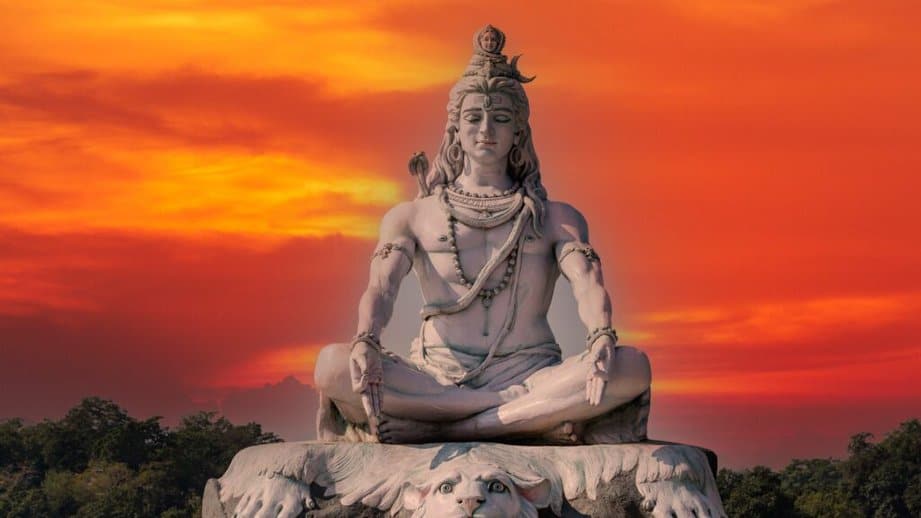
Hinduism is the third-largest religion in the world and also one of the oldest organized religions. It was formed in 2300 BC and has about 1.1 billion followers today. While most Hindus worship one God, they accept that more gods exist.
Followers believe in karma, which states that your actions will eventually be returned to you in the form of consequence or reward. They also believe in samsara, which states that life is cyclical and that you come back in the next life reincarnated as something or someone else.
Buddhism

There are about 520 million Buddhists in the world which is around 7% of the population. There are two major schools of Buddhism called Mahayana and Theravada.
The religion began with Siddhartha Gautama, a man who grew up rich and decided to follow a path of self-denial. He discovered four noble truths which state that suffering is part of existence, suffering is caused by craving and attachment, the end of suffering is Nirvana or ultimate bliss, and the path to Nirvana is made up of eight simple steps. The goal of Buddhism is to achieve the state of enlightenment called Nirvana by following the eightfold path.
Shinto

Shinto is the major religion followed by the people of Japan. Shinto has no founder, no specific scriptures and no real dogmas. Instead, it follows the “way of kami”. Kami are the personified concepts of rivers, trees, wind and other natural elements. It is believed that humans become kami after death. The main focus of the religion is on ancestry and nature.
Sikhism

Sikhism may be one of the younger world religions, but it has about 28 million followers around the globe. It is based on the teachings of Guru Nanak and other succeeding gurus. Sikhs believe that there is no one religion in the world that is the true, ultimate spiritual truth.
Sikhism believes in one central God who can be approached through meditation. The religion is based on total equality and making a living through honorable and honest methods. Sikhs wear five articles that represent their faith and follow four commandments: never eating sacrificial meat, never cutting their hair, avoiding tobacco and intoxicants, and resisting adultery.
Judaism

There are about 17.4 million Jews worldwide today, making Judaism one of the largest religions. About 43% of the people who follow Judaism live in Israel, with another 43% residing in either Canada or the United States. The religion is based on the writings of the Torah and has 13 principles of faith.
Judaism is more than just a religion but also a culture, political group and a ethnic group. They use their own alphabet and language for religious purpose and in everyday life. Judaism is divided into two distinct groups, the orthodox Jews and the conservative Jews. There is also Reform Judaism which is the most flexible and follows looser interpretations of Jewish law.
Spiritism

Spiritism first became popular in the mid-19th century in France. A writer named Allan Kardec worte a doctorine which described a cycle where a spirit returns to a material item after the death of the body. Spiritism combines scientific, philosophical and religious points to describe how the universe works.
There are about 13 million people who follow spiritism, and Brazil alone has 3.8 million followers. Being a good, moral person is a huge part of this popular religion. The importance of charity is stressed, as well as forgiving others of wrongdoing.
Taoism

Taoism is an ancient Chinese religion that focuses on nature and life and how all things are connected. The main emphasis is on living in harmony with nature and finding simple balance in life through meditation and tai chi.
Taoism has its own unique doctrines and practices but has incorporated many Buddhist beliefs as well. The yin and yang are primary concepts in Taoism, with the yin representing feminine, receptive energy and the yang being masculine, creative energy that comes together in harmony. Taoists believe that the soul is eternal and lives beyond the cycle of life and death.
Confucianism

About 6 million people follow Confucianism and the writings of Confucius from 500 BC. The religion has a large influence on East Asian cultures like China, Japan, Vietnam, and Korea. The teachings are compiled in a book known as the Analects or Lunyu.
The main belief of this widely popular religion is that people are inherently good and should act with compassion, morality, humility, and charity in everyday life. Doing what is best for family, society, and the self is the essence of the religion, and five essential relationships are outlined for societal harmony.
Caodaism

Caodaism has around 4.4 million followers, but it is a very new religion that started in 1921 in Vietnam. It is considered a mix of Buddhism, Confucianism, and Taoism. Caoists believe in several creator spirits and also devils similar to the Catholic Satan.
Caodaism follows the belief that the soul can only enter heaven through good behavior. Reincarnation continues until the soul is good enough to go to heaven. Caodaism promotes gender equality and social services for those in need. It also has many vibrant rituals and traditions and promotes dialogue between all religions.
Unaligned

About 16% of the world’s population does not align with a religion. The term irreligion was first popularized in 1527 and has been defined as the rejection of religion.
There are many resons why people may choose not to allign with a religion including atheism or simple skeptisism. However, many people are unaligned as they find truth in multiple religions and cannot completely agree with any one singular view.


